
Beard Comb or Beard Brush: Which to Choose for Your Beard (and in What Order to Use Them)
Beard comb or beard brush: the comb detangles, shapes the moustache and fits in a pocket, the brush spreads oil, massages the skin and adds volume. Under half an inch, a soft brush is all you need. Between half an inch and just over an inch, the brush does most of the work and the comb handles the edges. Beyond that, you need both, in this order: comb to detangle, brush to finish.
The question comes up every time a man grows his beard: should he buy a comb, a brush, or both? Shop assistants say "both" out of habit, and it is often wrong. These two tools do not do the same job, and depending on your beard length, one of them may stay in the drawer. Here is the point by point comparison, the order of use that works, and the mistakes that damage the hair. If you have already settled on a brush and are wondering about the material, our boar bristle or synthetic beard brush comparison picks up from there.
01The short answer, by beard length
Stubble to half an inch (about 1 cm): there is nothing to detangle. A comb catches nothing, while a soft brush lifts dead skin and lays down the hairs growing sideways. A brush, no comb. Half an inch to just over an inch (1 to 3 cm): the brush does 80 percent of the morning work, and the comb becomes useful for the moustache and for laying the hairs flat before you line up the cheeks. Brush first, comb as a backup. Over an inch (3 cm and more): the hairs tangle overnight, and a brush dragged over knots snaps the hair. You need a wide tooth comb first to detangle, then the brush to spread oil and smooth. Both, in that order, every time. Over three inches (8 cm): the comb becomes the main tool and the brush is for finishing and shine.
02What a beard comb does (and what it does not)

A comb separates the hairs and gives them a direction. It slides between the strands, undoes knots one by one if you start at the tips, and sets the moustache to the sides so it does not hang over your lip. It is also useful before a trim: run downward over the cheeks, it lays the hairs flat and shows the true edge of the beard. What it does not do: it does not massage the skin, it barely spreads oil, and it adds no volume. The material matters. A moulded plastic comb has tiny burrs between the teeth that snag and load the hair with static. Wood and horn glide. Our customizable wooden beard comb is hand engraved in our workshop in France, in Burgundy, with a first name or two initials. It is the pocket tool: it comes out at the office, in the car, before a meeting, and it is the one you lose least when it carries your name.
03What a beard brush does

The brush works through the thickness. Its bristles reach through the beard to the skin, lift dead skin, boost circulation and, above all, spread sebum and oil from root to tip. It is what makes a beard soft and shiny, and what gives volume to a beard that looks flat or patchy, because it lines the hairs up in the same direction. Thirty seconds in the morning is enough. Our engraved beard brush (39.99 €) has boar bristles and a wooden handle hand engraved in our workshop in France. It gives its best after a few drops of beard growth oil massaged down to the skin: the brush spreads oil better than fingers and avoids a beard that is greasy in places and dry elsewhere. What it does not do: undo a knot. It pulls, and the hair snaps.
04The comparison, point by point
Detangling
Clear win for the comb from an inch up. Start at the tips, work up toward the root, one knot at a time. The brush is not built for this.
Spreading oil and shine
Clear win for the brush, natural bristle preferably. The comb leaves the oil wherever your fingers put it.
Moustache and edges
Win for the comb. Its fine teeth set the moustache and lay the cheek hairs flat before you trace the line. The brush is too wide for this precision work.
Sensitive skin and itchy beard
Win for the brush, as long as you do not press. The massage lifts the flakes that itch. The comb never touches the skin.
Travel
Win for the comb: flat, light, it fits in a pocket. On the road it goes into an engraved toiletry bag (39.99 €) with the small bottle of oil, and the brush stays home if the beard is under an inch.
Care
The comb rinses and dries in a minute. The brush is cleaned dry, by running the comb through the bristles to pull out what is caught, and washed once a month without soaking the handle. Even here the two tools work together.
Price and lifespan
A good wooden comb costs between 8 and 25 €, a natural bristle brush between 15 and 40 €, more if it is engraved. Both last for years if you let them dry between uses. A 2 € plastic comb needs replacing as soon as the teeth split, often within months.
05Which order to use them in: the routine in 4 moves
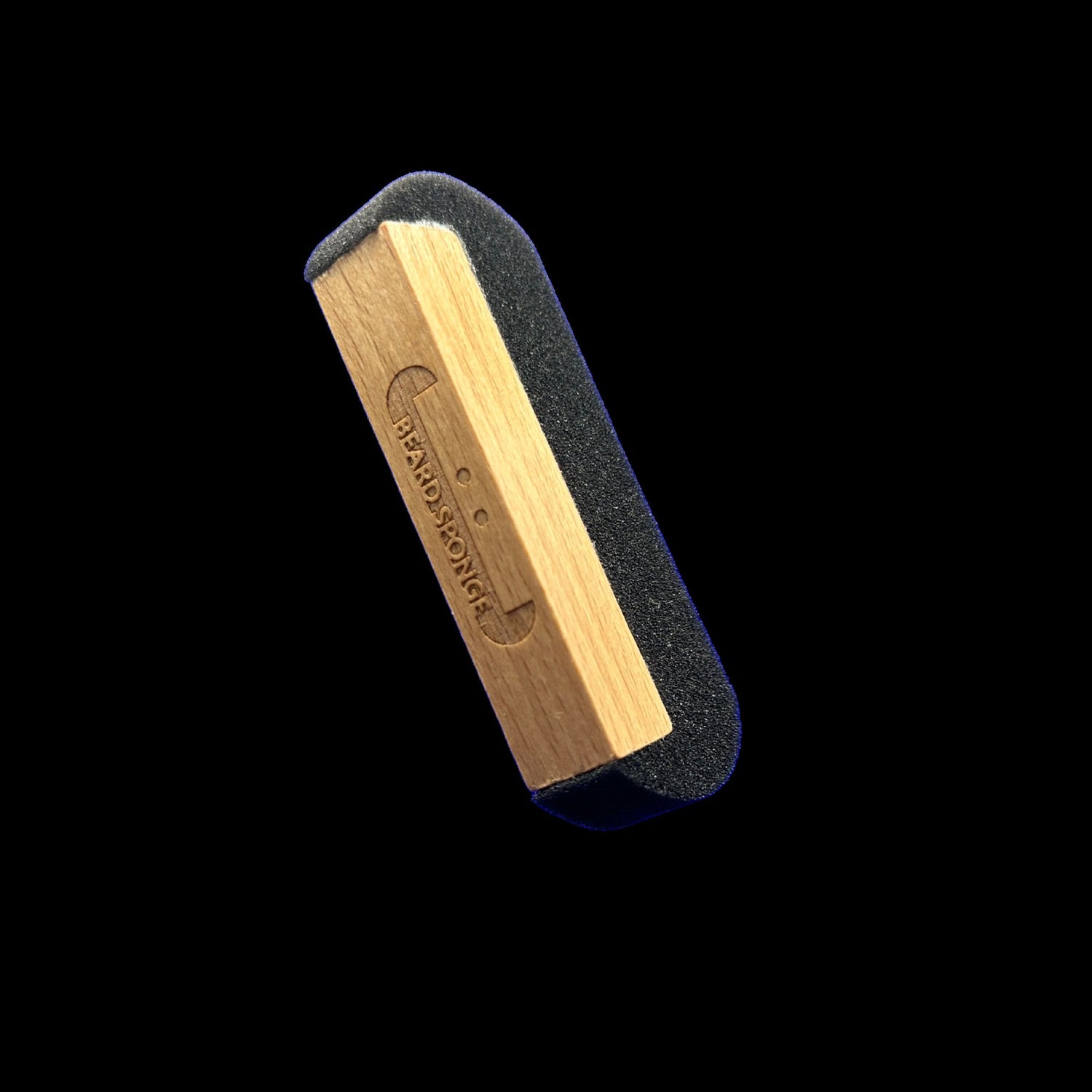
First move, on a dry or barely damp beard, never wet: a few drops of oil warmed between your hands and massaged down to the skin. Second move, the comb, upward first to open the beard and undo knots, then downward to lay it flat. Third move, the brush, ten strokes in the direction of growth, from the top of the cheeks toward the chin, then outward on the sides to set the shape. Fourth move, often forgotten: pick up what fell. Brushing a beard over an inch long leaves a dozen hairs on the sink every morning, and that is what annoys the person who comes after you. One pass of the Beard Sponge (9.99 €), the sponge that picks up beard hair from the sink in a single swipe, settles it in ten seconds. Reusable, rated 4.8/5 on more than 1,300 reviews, with a buy 2 get 1 free offer on the product page. The whole thing takes three minutes.
06The 5 mistakes that damage the beard
Brushing a wet beard: wet hair is fragile and snaps twice as easily. Wait until it is almost dry. Attacking a knot with the brush: the brush pulls, and the hair comes out with it. Knots come undone with the comb, from the tips. Combing from the root: you push the knot downward and tighten it. Always detangle from the bottom up. Pressing hard with the brush to "do it properly": you irritate the skin and rip out healthy hairs. The weight of your hand is enough. Keeping the moulded plastic comb: look at a tooth under a magnifying glass, the tiny burrs are blades that scrape the hair on every pass. If these mistakes sound familiar, our beard care routine in 10 steps puts everything back in order, from washing to trimming.
07Special cases: short beard, long beard, moustache, beginner
Short beard and skin that reddens: a soft brush, no pressure, and no comb before half an inch. Long, thick beard: a wide tooth comb for the lengths, a fine tooth comb for the moustache, and a natural bristle brush to finish. Moustache only: a small comb is enough, the brush has no business there. Beginner who wants to buy one tool only: the brush if the beard is under an inch, the comb beyond that. The man who has everything: a tool engraved with his name, the one he will never buy for himself. The comb, the brush, the shaving guide and the toiletry bag are all part of our personalized beard accessories, engraved in our workshop in France. For the holidays, our list of Christmas gifts for a bearded man gives the ideas that go with them.
How to choose
Measure your beard. Under half an inch: a soft brush, nothing else. Half an inch to an inch: the brush every morning, and a pocket comb for the moustache and daytime touch ups. Over an inch: both, comb first, brush second, and oil before. Choose wood over plastic, natural bristle over nylon if your skin tolerates it, and a tool you will enjoy taking out. If it is a gift, the engraving is what turns an accessory into something he keeps. Orders ship from France.
See the customizable beard combSee also
Once the beard is combed and laid flat, the customizable shaving guide (19.99 €) rests against the cheek to trace a clean line, and the beard bib with suction cups (29.99 €) catches the trimmings before they reach the sink. Between washes, the clean beard spray freshens the beard without stripping it, and you will find all our tools in the collection of all our beard accessories.
Frequently asked questions
Beard comb or beard brush, which should I choose?
A soft brush if the beard is under an inch, it massages the skin and spreads oil. Over an inch, both: the comb to detangle, the brush to smooth and add shine. A comb alone is enough for a moustache.
Should I comb or brush my beard first?
Comb first, to undo knots starting from the tips. Brush second, in the direction of growth, to spread the oil and set the shape. Always on a dry or barely damp beard.
Can I brush my beard every day?
Yes, once a day, ten strokes in the morning, without pressing. More often or harder, the skin gets irritated and healthy hairs fall out.
Wooden or plastic comb for a beard?
Wooden. Moulded plastic has burrs between the teeth that scrape the hair and create static. A wooden comb glides, lasts for years and can be engraved.
How do I clean a beard brush?
Run the comb through the bristles after use to pull out hairs and dead skin. Once a month, wash the bristles in lukewarm water with a little mild soap, without soaking the handle, and let it dry bristles down.