

How to Use a Safety Razor: The Step by Step Guide in 7 Steps
To use a safety razor: load a fresh blade, prep your skin with hot water, build a real lather, hold the razor at about 30 degrees and let its weight do the work, with no pressure. Short strokes with the grain, a cold water rinse, and you are done.
A safety razor is a little intimidating the first time. One bare blade that you screw into a metal head yourself. In reality, it is the simplest razor to understand: nothing to adjust, nothing to recharge, and the blade sticks out by a hair. What changes compared with a disposable razor is the gesture. You stop pressing and start guiding. Give it a week to get the hang of it, and you will not go back. Here is the method, step by step, the way we explain it in the workshop when someone asks us where to start.
01Understand how it is built

A safety razor is three parts: a handle, a head, and a double edge blade held between the two. The head covers almost the whole blade and only lets the edge show. That guard is where the name comes from. The blades are standard, sold everywhere, and cost a few cents each. The handle, on the other hand, lasts for years. Ours is olive wood, engraved by hand in our workshop in France: the olive wood safety razor is 89.99 €, for the man who wants a good looking object he will never throw away.
02Load the blade without cutting yourself
Unscrew the head over a towel, not over the sink: if the blade drops, it will not slide down the drain. Take the blade out of its paper holding it by the short ends, never by the edges. Lay it on the head, centred on the posts, then screw the razor back together without forcing. Look at the razor head on: the blade should show the same width on both sides. If it sits crooked, one side will shave too much and the other not enough. Ten seconds of checking prevents most first day nicks.
03Prep your skin and build a real lather
A safety razor is not forgiving on dry skin. Shave after a shower, or lay a hot towel on your face for two minutes. Then the lather: a shaving soap or cream whipped with a brush gives a dense lather that lets the blade glide and lifts the hair. Canned foam will do in a pinch, but it dries fast and protects less. Let it sit for a minute before you start. We covered the whole preparation in our guide on how to shave properly, and it applies to every razor.
04Find the right angle: about 30 degrees
This is the only truly technical point. Rest the head of the razor flat against your cheek, handle horizontal: in that position the blade does not touch the skin. Then lower the handle slowly until you feel the blade catch the hair. That is it, roughly 30 degrees. Too flat and the razor glides without cutting. Too steep and it scrapes and nicks. Keep your wrist loose and move your whole arm rather than your hand, the angle stays steadier. At first, practise on the cheek, it is the flattest and easiest area.
05No pressure, short strokes
Cartridge razors have taught us to press. Here, that is mistake number one. The metal head is heavy enough for the blade to cut on its own. Hold the handle with your fingertips, low down, and let the razor travel. Make strokes of an inch or two, with the grain, and rinse the head in hot water every two or three strokes. For a closer shave, lather up again and make a second pass across the grain. Leave shaving against the grain for later, once the gesture is second nature.
06The tricky areas: neck, chin, moustache
The neck first, because hair grows in every direction there. Run your hand over it dry to map the directions, and follow them, even if that means shaving sideways or upwards. Stretch the skin with your free hand and lift your chin. For the chin, make very short strokes that follow the curve, without trying to take it all in one go. Under the nose, pull your upper lip down to tighten the skin and work down in small touches. If you keep a beard and only shave the edges, the slim head of a safety razor draws a clean line on the cheeks and neck.
07Rinse, dry, and change the blade in time

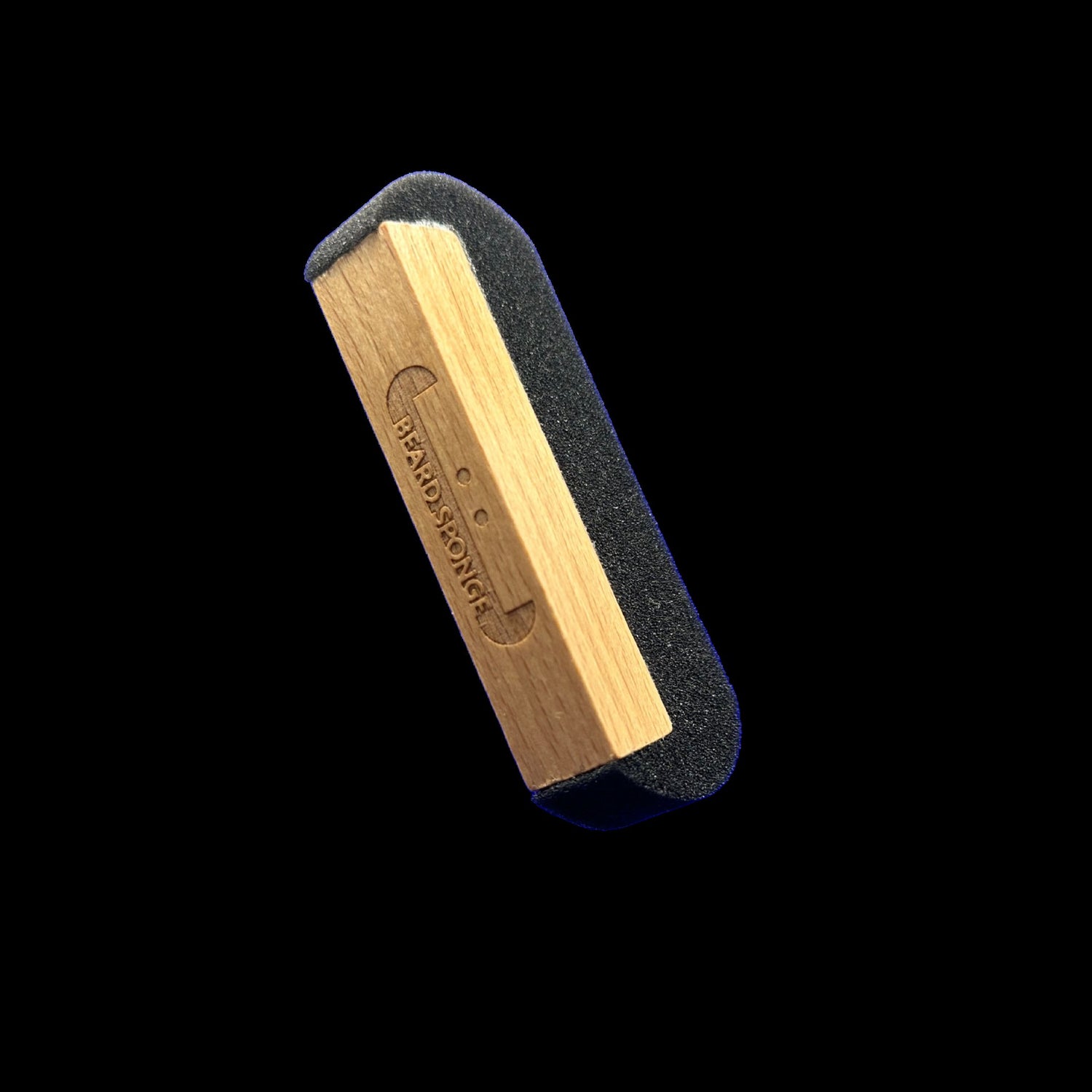
Rinse your face with cold water, pat dry, then apply an alcohol free aftershave balm. As for the razor: loosen the head a quarter turn, rinse under hot water, shake it and let it air dry, away from the shower. A wooden handle does not like to soak. Change the blade every five to seven shaves, or as soon as it tugs. And for the sink, the short hairs stuck to the ceramic come off in one pass with the Beard Sponge (9.99 €), a reusable sponge made for exactly that. Used blades go in a small closed tin, not loose in the bin.
How to choose a safety razor
To start, pick a closed comb model, meaning one with a smooth bar under the blade: it is milder than an open comb. A slightly heavy razor helps you not to press. The handle should grip well, even when wet. Then buy a sampler of blades, they do not all suit the same skin and hair. And if it is a gift, a razor engraved with his name changes everything: it is part of our personalized beard accessories, and we share more ideas in our list of engraved gifts for men.
See the safety razorFrequently asked questions
Is a safety razor dangerous for a beginner?
No. The blade barely sticks out of the head, which is why it is called a safety razor. The small nicks at the start almost always come from too much pressure or too steep an angle.
What angle should you hold a safety razor at?
About 30 degrees between the blade and the skin. Rest the head flat on your cheek, then lower the handle until the blade catches the hair.
How many shaves do you get from one blade?
Five to seven shaves on average. Change it as soon as it tugs instead of cutting. A double edge blade costs a few cents.
Can you fly with a safety razor?
The razor without a blade is generally allowed in the cabin, but double edge blades are most often banned from hand luggage. Put them in checked luggage or buy some when you arrive.